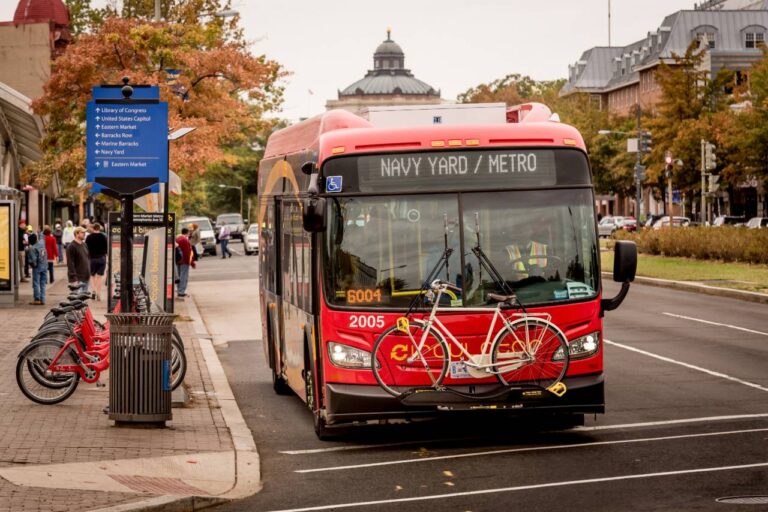
Washington, D.C. has some of the worst traffic in the country, and its air quality pays a price.
D.C. officials decided to do something about it by boosting public transportation and investing in clean energy transportation alternatives to cut congestion and carbon emissions. After years of intensive planning, DC is now recognized as one of the top cities for clean energy and transportation policies.
Transportation makes up 40% of the carbon pollution generated in the district. D.C. Mayor Muriel Bowser moved to tackle this problem when she signed the 2018 Clean Energy Omnibus Act, which requires all of the district’s energy to come from renewable sources by 2032, and promotes the electrification of public buses, taxis, and certain privately-owned vehicle fleets. Half of these vehicles will need to be electric by 2030, increasing to 100% by 2050.
“If we are going to make progress on addressing climate change and global warming in our country, it’s going to be cities and states leading the way,” Bowser said when signing the bill. “We have created a model for jurisdictions across the nation to follow.”
The district has been planning for the impacts of climate change for over a decade, often linking it to a broader context of social equity, environmental responsibility, and economic opportunity. As part of its Sustainable DC 2.0 initiative, the district has a number of major climate-related programs underway to cut emissions and protect the city from future extreme weather- and health-based threats that scientists say are likely to impact the region. In addition to the clean energy initiative, which mandates increased renewable energy supplies, energy efficiency upgrades to buildings, and investments in clean energy projects, in 2016, the district released a climate change adaptation plan, Climate Ready DC, which outlines specific actions to combat future climate threats.
